
Make It Easy
The Little Red Schoolhouse Method for Clear and Persuasive Writing, Part 2

The Little Red Schoolhouse (LRS) method was created at the University of Chicago by Joe Williams, Larry McEnerney, and Frank Kinahan. I taught in the program when I was in grad school, and the LRS method has informed my work as a teacher, editor, and writer ever since.
If you’re just joining us, here’s a link to part 1, “We Write for Readers,” which introduces general LRS principles and ends with an analysis of an obfuscating auto-recall letter (it’s more fun than it sounds, I promise!).

Unless we have an ulterior motive for writing incomprehensibly—say we’re a lawyer writing an auto-recall letter1 —it is in our interest to make it easy for our readers to understand us. The LRS method offers several techniques to accomplish this goal.
Take Shortcuts to Clarity
Clear and specific titles tell our readers what we will discuss, and headings at the beginnings of sections remind readers where we are in the argument. Writers often resist using these shortcuts. “But I want to be subtle and artistic. Won’t it be too obvious if I just tell them what I’m arguing?” they wonder. The answer is no. Our topics have been living in our heads for ages, so our arguments are obvious to us. But our readers are encountering our thoughts for the first time. Informative titles and headers guide them through.
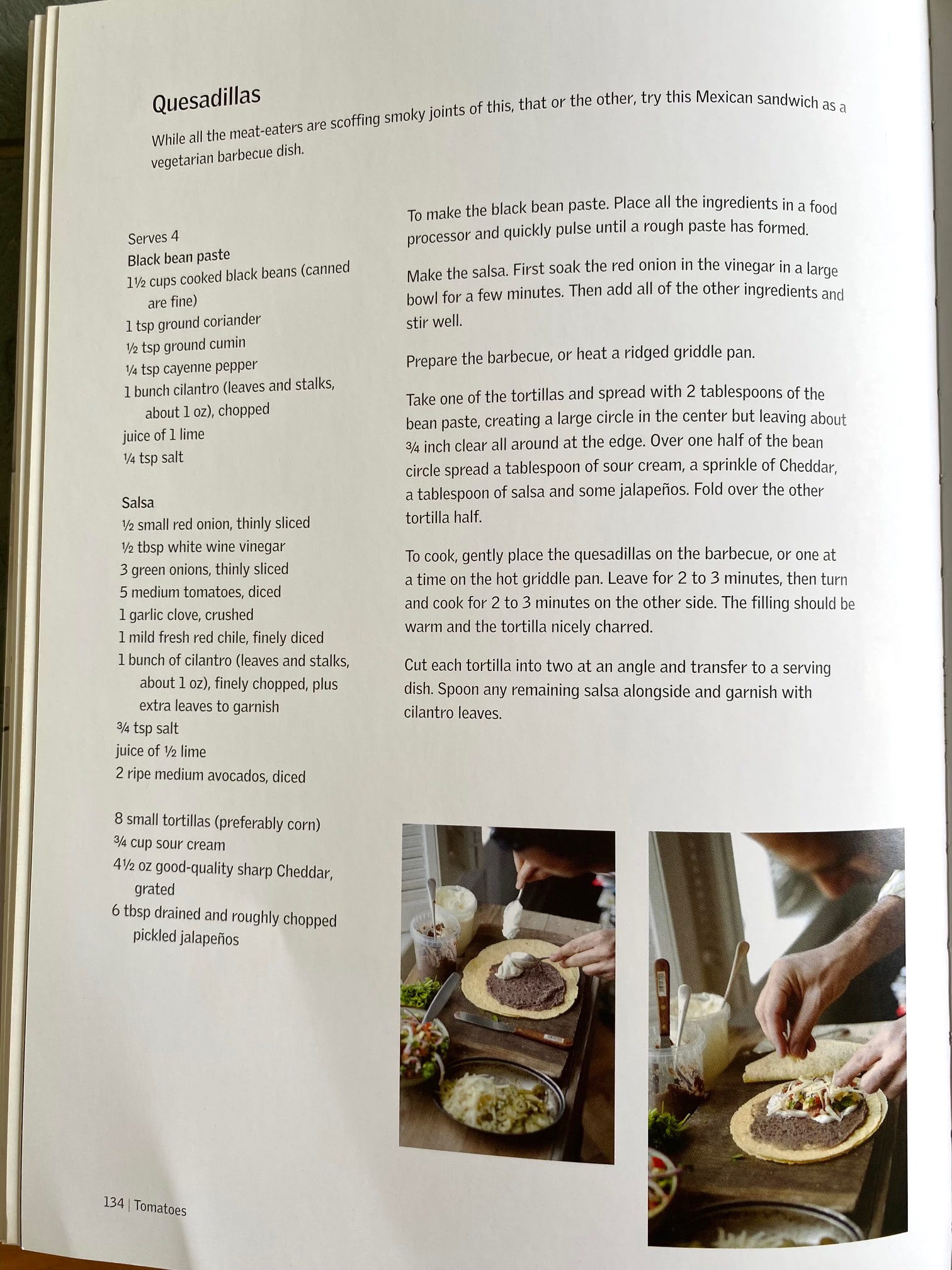
We can also help our readers by organizing our thoughts into a logical sequence. Think of a cookbook with clearly numbered instructions. It’s a pleasure to make these recipes, right? Now think of a cookbook where every ingredient is its own recipe, and where you have to keep rereading and backtracking to make sure you didn’t miss anything. (Looking at you, Yotam Ottolenghi!2)
To help my high school students practice writing in a logical sequence, I used to assign a how-to paper, where they taught readers how to do something cool. One student described how to do an airplane safety check.3 He took us around the plane with us as he went through the items on his list. The plane itself was the organizing principle. It was easy for readers to visualize the plane and follow him through the sequence of checks.
Stress Is Our Friend
Well, the stress position is, anyway.
The stress position is the last in a series, and readers perceive it as the most important point, as the one that undercuts, complicates, or completes the information that comes before it. It allows us to introduce complexity into our arguments and to consider the other side—while still making our point. The stress position is related to the rule of three from folk tales and jokes. It’s the punchline.4
For example, imagine you’re starting a new job, and your new coworkers say,
Our boss is weird, but people like him.
vs.
People like him, but our boss is weird.
Which boss would you prefer?
The stress position is also useful in creative writing. Notice how Edna St. Vincent Millay uses the stress position in the first stanza of “Recuerdo”:
We were very tired, we were very merry—
We had gone back and forth all night on the ferry.
It was bare and bright, and smelled like a stable—
But we looked into a fire, we leaned across a table,
We lay on a hill-top underneath the moon;
And the whistles kept blowing, and the dawn came soon.
Millay’s delightful poem captures a breathless, exhilarating night when two young people stay out exploring and discover that they’re falling in love. It’s Before Sunrise in miniature.
Millay alternates negative and positive words, always placing the positive words last, in the stress position. The lovers are tired but merry; it was bare, but also bright. “Merry” and “bright” are more important than “tired” and “bare.” It might have smelled like a stable, but the lovers gaze at each other near a cosy fire. And never mind the whistles; the sunrise is coming.
So What?
Most important of all, we should be able to answer a simple question: “So what?” Remember, we are competing for readers’ attention and need to make our writing worth their while. The “so what” is where we introduce a problem we will solve, offer wisdom readers can use in their own lives, or overturn our preconceptions and introduce an entirely new idea.
Here’s an example of a “so what” paragraph from my perennial rant that airlines should make checked luggage free and charge for carry-on bags:
On Perverse Incentives

Unless you have your own plane, you, like me, probably don’t enjoy flying. While I am grateful that we can be whisked around the world safely, the process of flying is needlessly frustrating and unpleasant. Think about the last time you flew: you waited in the endless line at the ticket counter, you had to strip off your shoes and outerwear—and even, as…
. . . and even, as though it were somehow impenetrable to the metal detector, your hand-knit cardigan—and unpacked and repacked your bag at security. You braved the grouchy crowd at the gate, weathered the glacial boarding process, fought through the clogged aisle, worried about inadequate space in the overhead compartment, and risked missing your connecting flight because of the long wait to deplane while the poky people ahead of you lumbered along with their cumbersome bags. There is a better way!
This paragraph draws readers in by being relatable. Most of us dislike flying and are curious about ways the experience could be improved.
We can also inspire readers with life lessons. Here’s the conclusion to Casey’s paper we looked at last week:
“Prometheus” and The Vampyre both present protagonists who must remain silent. Prometheus chooses to remain silent in an act of strength, but his strength is not truly heroic because he is such a solitary figure. Aubrey, by contrast, is responsible for the protection of his loved ones, but his silence makes him powerless and prevents him from fulfilling his duty. Although Byron frames Prometheus as a character to emulate, his courage is more an egocentric expression of virtue than a good deed done for others. Meanwhile, Polidori presents a protagonist who is more representative of his readers, who might be asked to keep a dangerous secret for a powerful person. Therefore, The Vampyre reminds its readers that they are not cursed to be silent, and they should speak up [boldface added].
Casey’s paper doesn’t simply compare two works of nineteenth-century Romantic literature—which would admittedly interest few outside of English departments. In fact the ending is useful for everyone because it challenges us to be courageous in our own lives. The paper’s “so what” encourages us to take responsibility for others instead of being solitary like Prometheus, and it urges us to speak up when something is wrong.
Finally, writers can share a genuinely new idea that upends what everyone thinks. Famous examples include that stomach ulcers are caused not by stress but by bacteria, that the Dutch Masters likely used projectors to create their photo-realistic paintings, and quantum mechanics.
In my own small way I once came up with a “so what” like this when I was researching my dissertation on Daniel Defoe. His novel Moll Flanders notoriously includes brother-sister incest: Among Moll’s many deviations from the straight and narrow (prostitution, thievery), she unwittingly marries her half-brother.
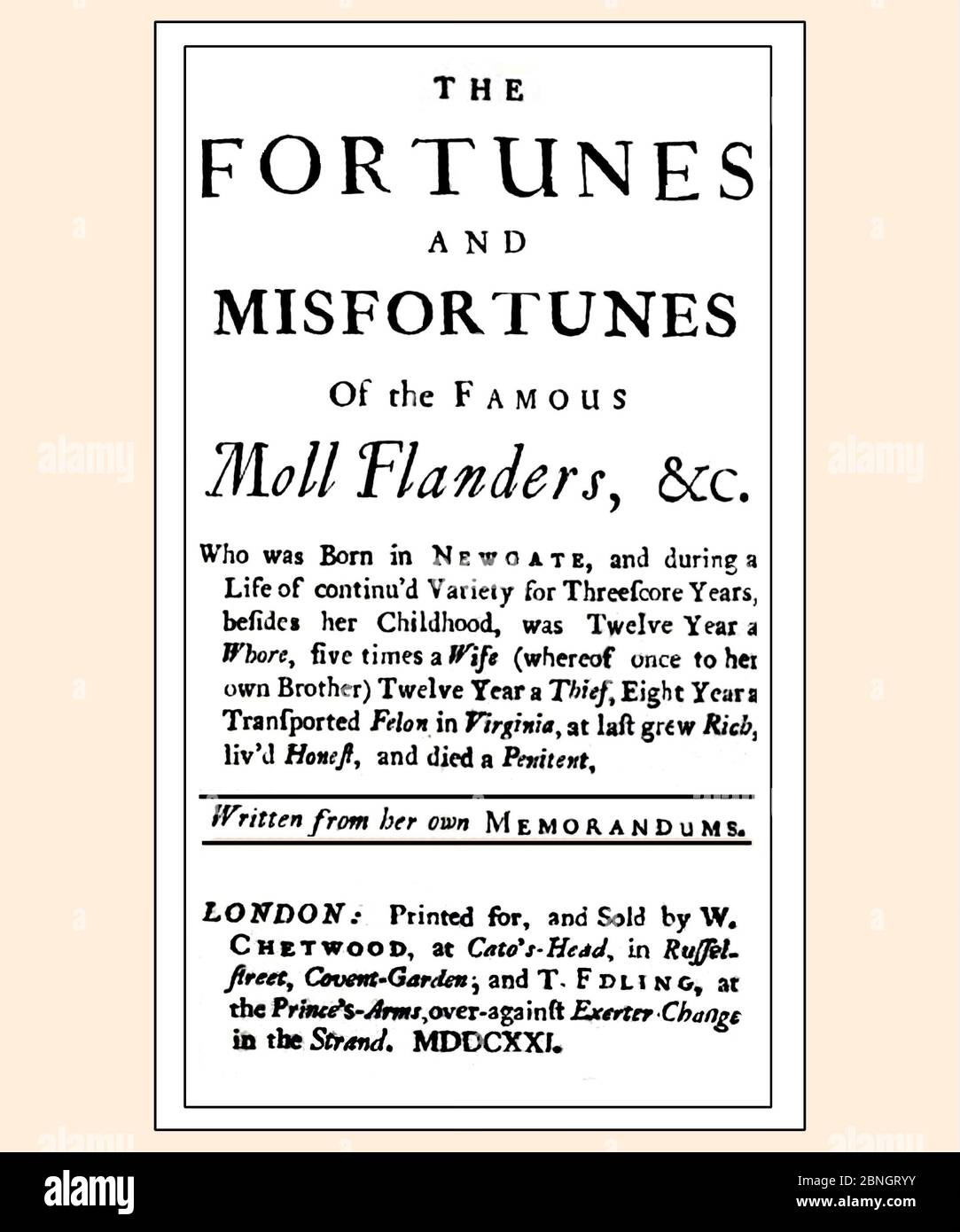
My theory was that he wasn’t actually Moll’s brother. Defoe gives us enough specific information about Moll’s adventures and the characters’ ages that I could crunch the numbers and put together a timeline showing that the years didn’t add up, and that it was impossible for the man she calls her brother actually to have been her brother.
This observation led to a feminist “so what”: Moll’s predilection for casual sex and her adventurous personality are more typically masculine than feminine, especially for a woman in the 1720s. Her wanderlust causes her to chafe at monogamy and a settled life. To keep readers on Moll’s side, and to keep her adventures going, Defoe could have introduced the incest to give Moll a legitimate excuse for ending her marriage to a man who was otherwise a good and kind husband.5
One More Thing . . .
Frank died of a heart attack in 1993. He was only 48. Joe died in 2008. As far as I know, Larry is still teaching the LRS method at law firms and businesses, but otherwise LRS is no longer taught, not even at the University of Chicago. Apart from a few adulatory comments on Reddit and stray mentions here and there, LRS has no online presence. Joe’s books are out of print. So what was even the point?
Well, LRS may not have brought its creators fame or fortune, but hundreds of us LRS alumni continue to use their ideas in our daily lives. We share them with our students and our loved ones, and they influence how we communicate and even think. Countless readers have benefited from clearer prose, thanks to LRS. Every time I write—in other words, every single day—I remember Larry, Joe, and Frank.
There are tech bros right now who are engaged in a quixotic (Frankensteinian?) quest for immortality. They ingest supplements by the handful and inject a whole pharmacy’s worth of peptides. They imitate vampires, transfusing their teenaged son’s blood into their own bodies. They will fail. It is ironic that Silicon Valley geniuses are ignorant of the most fundamental truth of life, that we are all going to die. And it is tragic that they don’t understand what the rest of us know, that the secret to immortality is connecting with and helping other people, so that we live on in the hearts, thoughts, and actions of those whose lives we have touched during our brief time here on earth.
How about you, readers? What are your best tips for writing clearly and persuasively? Who is a teacher or mentor who has lived on in you? Please share your thoughts in the comments!
The Tidbit
Did anyone else have “Take It Easy” running through your heads after you read the title of this post? Ignore the snobs who tell us that the Eagles are hated by cool people, are Boomer-coded,6 and are liked by Republicans (the horror!). Their loss. The Eagles are a fantastic band. No need for auto tune, studio engineering, or session musicians: These guys can really play and sing. Sing along with me!
Or say we’re a literary theorist. In grad school I secretly wondered whether the literary theorists we all worshipped (e.g. Judith Butler, Frederic Jameson, Jacques Derrida, Jacques Lacan) wrote such impenetrable prose because they didn’t want us to be able to penetrate it and discover how little of value was actually there.
I own two Ottolenghi cookbooks and do enjoy making his recipes. But they are not for the casual cook! My friend Theresa agrees. One day she got fed up with Ottolenghi’s cookbook Simple, so she appended an “r” to the title: Simpler.
Q: How do you know you’re teaching in an elite high school?
A: One of your students has his own plane.
Speaking of which, here’s a joke:
John asked Mary to the prom, and she said yes! So John waited in a long line to buy tickets. Then he went to the florist and waited in a long line to buy a corsage. Then he went to the limo place and waited in a long line to book a limo. Then he went to the tuxedo place and waited in a long line to rent a tux. On prom night, they waited in a long line to get in. Mary wanted a glass of punch, but there was no punch line.
I ran this idea by my dissertation advisor, but he warned me against it, saying that everyone would think I was a crazy attention-seeker. So I dropped the whole thing. And to be fair, Defoe could have simply made an error in his chronology. But I still think it’s an interesting theory. Thank you, readers, for allowing me to explore it—for the first time publicly!—here.
I’m not a Boomer! I’m Gen-X [she said defensively].
Hi Mari. I've really enjoyed your posts about writing, especially since I just finished my fourth book (as you know). One of the challenges of a book is knowing or learning what to leave out. There are times in this book where I had painstakingly explained some bit of complicated medical info only to have my editor cut the entire section and give a comment along the lines of "we were getting lost in the details." At the time, I grit my teeth, whimpered a little to myself about how the details are so interesting, but I never argued with her. She was a generous and smart reader (like you!) and I figured I should trust her even if I didn't agree with her. The book is better for her efforts. When I taught writing at Tufts I would tell my students, "When in doubt, cut it out." I'm glad I had someone able to do the job for me when I couldn't. Too much information can be its own form of confusion and make writing less clear instead of more, which actually is interesting.
I took away some kernels of writing wisdom from this essay. Thanks!
I very much dig this thought: "the secret to immortality is connecting with and helping other people, so that we live on in the hearts, thoughts, and actions of those whose lives we have touched during our brief time here on earth." It reminds me a bit of Douglas Hofstadter's "I Am a Strange Loop"—but connection or not, it's simply a lovely and true concept.