
The William Tell Pact
Immigration in Switzerland

Readers, I need to issue a correction. Last week, while arguing that following the rules makes us free, I claimed that Swiss people never speed, and that as a result we don’t have traffic jams here. A Swiss-American acquaintance, Susan, pointed out that of course Swiss people speed and of course there are traffic jams here. I had to admit she was right. Mea culpa.
Why was I so off-base? Well, I never drive during rush hour, and I always avoid a traffic-plagued stretch of road where several major highways intersect. I’ll note that these jams are caused not by reckless drivers, but by too many cars trying to merge and switch lanes in too short a distance. And I still maintain that driving in Switzerland is nowhere near as hazardous or frustrating as driving on, say, the New Jersey Turnpike. But I am grateful for Susan’s reminder that we should not generalize from our own experiences, which may not be typical. Thank you, Susan!
Anyway, on to this week’s post!
William Tell: More Than Just the Apple
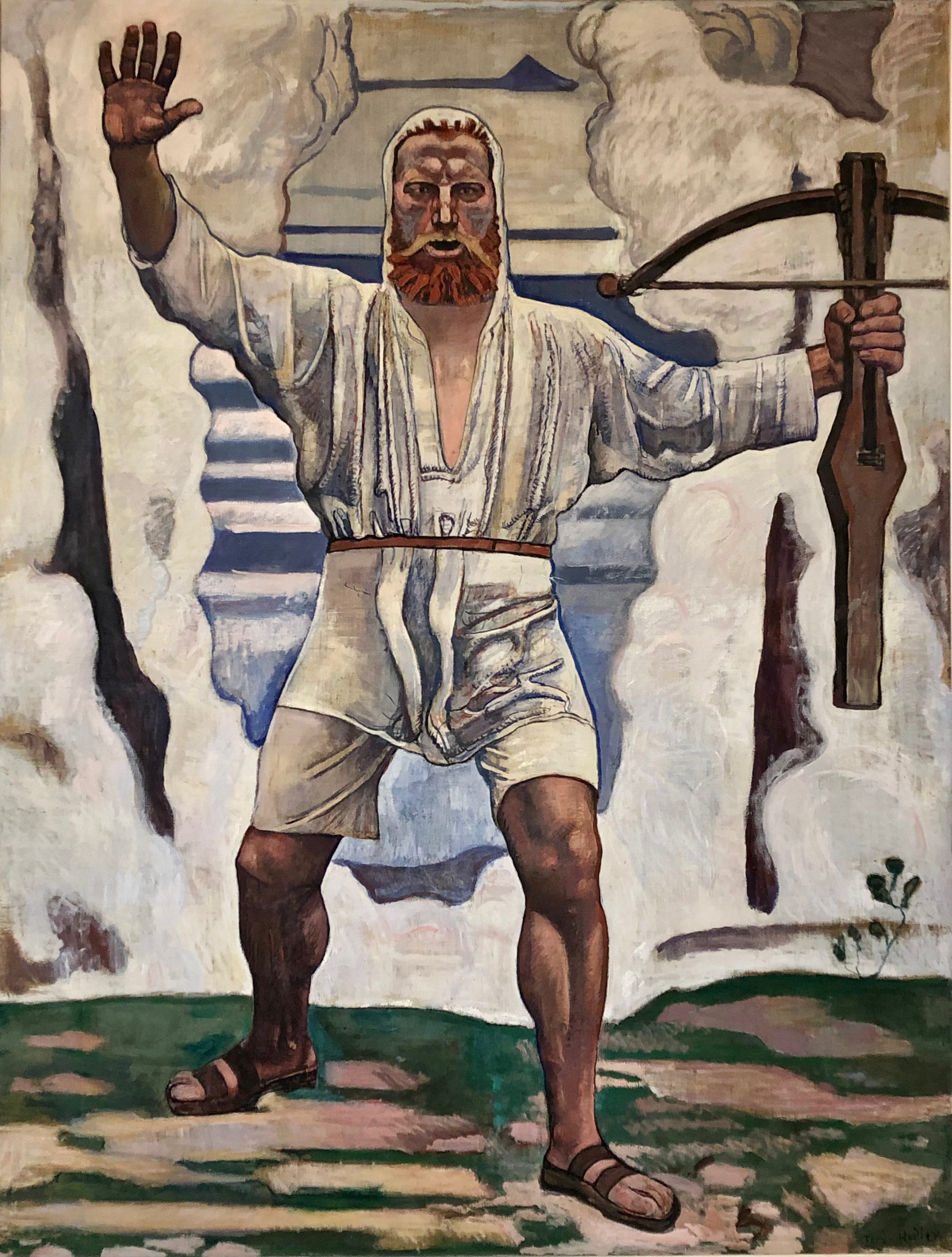
Most of us are familiar with the legend of the Swiss folk hero William Tell, who shoots an apple off his son’s head.
(Ok, fine. Since we all have the William Tell Overture in our heads now, let’s give it a listen before we continue:)
On a tour of Switzerland’s Bundeshaus (Federal Building) last week, I learned that there is a lot more to the William Tell story than just the apple stunt. Tell’s story epitomizes two Swiss values: freedom and democracy for ordinary people, and cooperation instead of conflict between groups.
Here’s the full story, which I have paraphrased from Wikipedia:
William Tell and his son visit a town that is under Hapsburg rule. The tyrannical Hapsburg governor, Albrecht Gessler, has placed his hat on a post and is requiring everyone to bow down to it, but Tell and his son refuse. As punishment, Gessler orders Tell to shoot an apple off his son’s head.
Tell succeeds, but as he and his son are leaving, Gessler asks why Tell had prepared two arrows instead of just one. Tell responds, “If I had missed the apple and shot my son, I was going to shoot you next.” So Gessler arrests Tell and puts him on a boat to take him to prison. As the boat is crossing Lake Lucerne, a tremendous storm blows up. The sailors beg the officials to release Tell, because he is the only one who knows how to manage the boat. They release Tell, he escapes, and he kills Gessler. Tell’s rebellion against tyranny inspires several tribes that were once rivals to make a pact to live together in peace and prosperity.
The Swiss belief in peaceful coexistence rather than perpetual war is also depicted in the “asylum frieze,” which greets visitors at the entrance of the Federal Building:
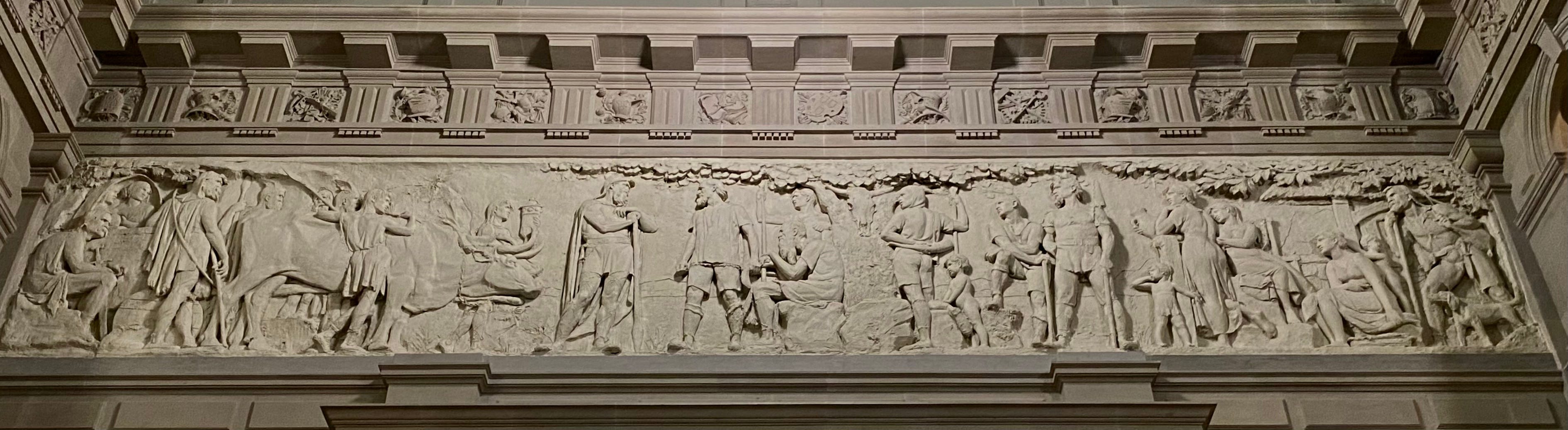
On the right, we see settled townspeople, and on the left we see people who have fled their town with all their possessions (symbolized by the cow). In the middle, representatives from each group are agreeing that the newcomers and the current residents will live together in peace.
Integration: It’s Not Just for Calculus
More than 26 percent of the people living in Switzerland are immigrants, compared with 15.4 percent in the US. In spite (or because!) of its high immigration rate, Switzerland is richer than the US; it ranks higher on the list of happiest nations; and its rates of unemployment, inflation, and economic inequality are significantly lower than ours.1 I know that correlation does not imply causation, but immigration doesn’t seem to be holding Switzerland back. What’s their secret?
Well, one secret is integration.2 The Swiss expect us immigrants to fit in. Each community has a quota for the number of immigrants it can take, which ensures that immigrants are distributed throughout communities and don’t become isolated from citizens. We mix and make friends with our Swiss neighbors. We are also required to learn the local language, at least at a basic level. I have found that Swiss people are patient and ready to help. As just one example, the other day I had to make an appointment, and when I asked the scheduler if we could speak English, she praised my German, saying it was perfectly adequate for our conversation—and then she proceeded to speak slowly and distinctly so that I could understand every word.
We are also expected to follow the rules here, even when they’re different from how we do things back home. Here’s a story to show what I mean: Several weeks ago, my husband, Matt, and I traveled high up in the mountains to get in one last winter hike before the snow melted.3 We had packed picnic lunches, but along the way I had a hankering for a beer. We passed a snack bar with tables facing a gorgeous view. Perfect, right?
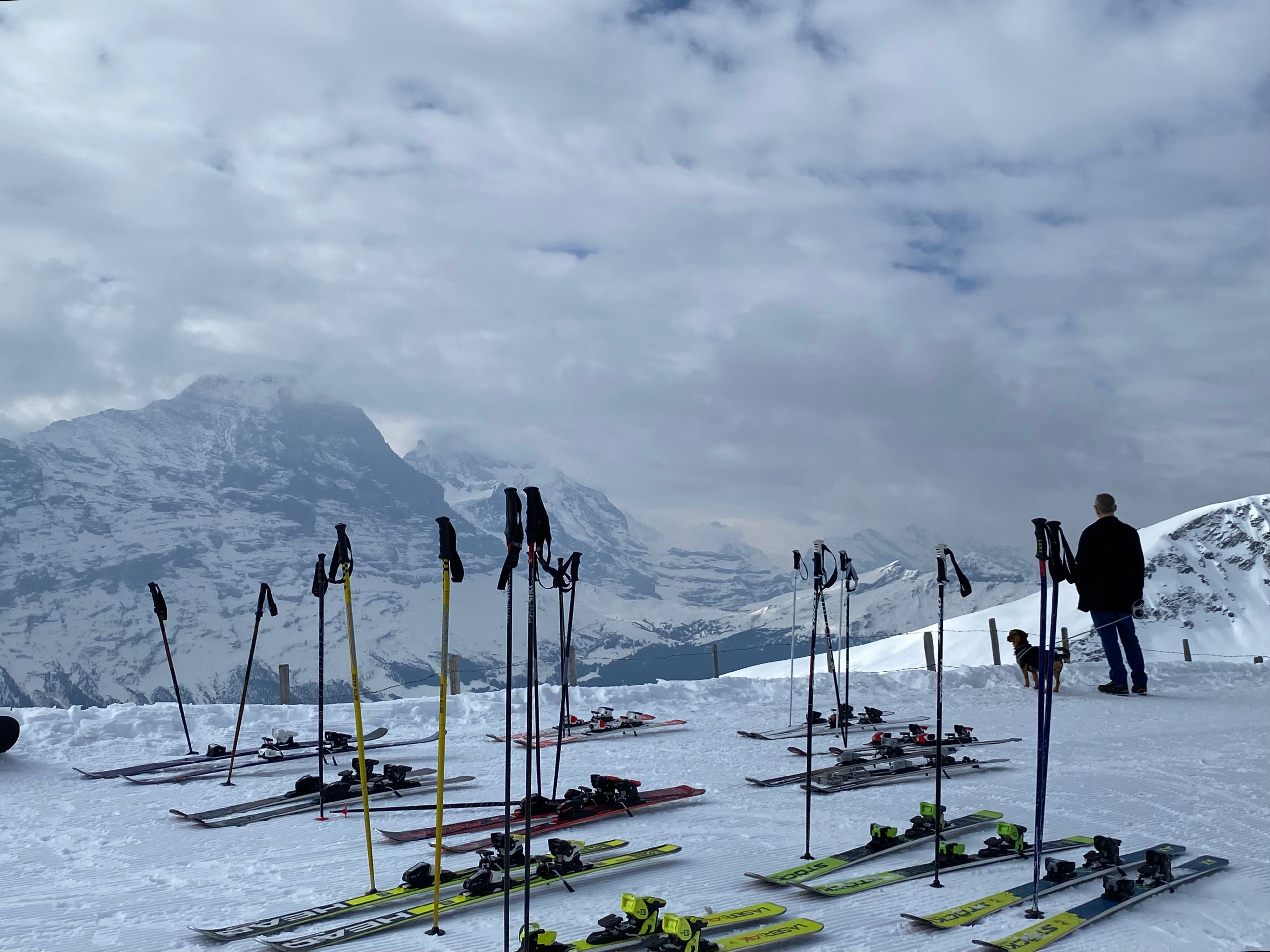
Most mountain snack bars and restaurants allow only paying customers to sit at the tables. So instead of just plopping down at a table and digging in, we asked the server if it would be ok to have our picnic if I bought a beer. Alas, she said no. So we continued on, beerless.4 In the US, we never would have asked at all. We would just have sat down, correctly assuming that no one would care one way or the other. But here in Switzerland, we cooperate and follow the rules. We have gone native.
Yes to 10 Million
I don’t mean to paint a totally rosy picture, though; immigration is a contentious issue here. Switzerland’s right-wing party, the SVP (Swiss People’s Party) has proposed a “No to 10 Million” referendum, which is up for a vote on June 14. The initiative would “limit Switzerland’s permanent resident population to 10 million by 2050.” (Switzerland’s current population is 9.1 million.) Polling shows that voters are evenly split, with 47 percent for, 47 percent against, and 6 percent undecided.
Supporters of the referendum argue that immigration places a burden on scarce resources, especially housing, and that too many immigrants will alter the character of the nation. A typical slogan, which I have seen on billboards as well as online, is “Keep Switzerland Swiss.”
Opponents of the referendum are apparently getting worried, because last week they mailed everyone a tabloid-sized publication that explains all the reasons to vote no. They argue that immigrant workers pay into the pension system and fill jobs that Swiss people can’t do or don’t want. We also spend our money here, which supports Swiss businesses. (Heck, my cheese purchases alone make a major contribution to nearby farms and shops.) In addition, the healthcare system relies on medical professionals from other countries. Opponents are especially worried that this law would cancel numerous economic agreements with the EU as well as free movement of people in and out of the country,5 which would lead to chaos and a possible recession.

(You can read more about the referendum, as well as arguments for and against it, here.)
For obvious personal reasons, I hope this referendum won’t pass. Matt and I have permanent residency, so it’s not like they’re going to kick us out, but it is kind of depressing that so many people seem to view us and our friends as threats to their country. I wish so much that everyone believed in the values of the William Tell legend. I wish everyone accepted that it is possible to live together in peace and harmony with those who aren’t in our tribe, and that in fact if we choose cooperation instead of conflict, we are all better off.
At the same time, I have to acknowledge the other William Tell value, democracy. In a democracy, if a majority of people vote for laws we don’t agree with, we have to accept the will of the people and follow the law. If this referendum passes, of course I will accept it.
But I am still hoping to influence the vote in my own small way, and so I have been acting as an informal immigration ambassador. In my many daily interactions with Swiss people, I am friendly and cooperative to show that we immigrants are good neighbors. I speak only German, never English. When we and our exuberant dog encounter neighbors on our walks, we call him back to us and make him walk nicely at our side (albeit with the air of a coiled spring, as Matt puts it).

And to demonstrate that immigration benefits the economy, I continue to buy an inordinate quantity of locally-produced cheese. It’s a tasty way to show I belong here!
How about you, readers? What are your experiences with immigration, either as an immigrant or as an American who interacts with immigrants? Please share your thoughts in the comments!
The Tidbit
Another way I have gone native is that I love yodeling and wrote a whole post about it two years ago. See (or hear) for yourself how cool yodeling is: The video below is full of fascinating information, glorious scenery, and impressive vocal feats.
Per capita GDP: $103,998 in Switzerland and $84,534 in the US.
Happiness rankings: Switzerland is 10th and the US is 23rd.
Unemployment rate: 3 percent in Switzerland and 4.3 percent in the US.
Inflation rate: 0.6 percent in Switzerland and 3.8 percent in the US.
Gini index: 33.8 in Switzerland and 41.8 in the US.
The other secret is that there is almost no illegal immigration here. I wrote about legal immigration in Switzerland a couple of years ago, here.
Ha! Shows what we know. It’s mid-May, and the mountains are STILL blanketed in snow. Yes, I am grumpy about our unseasonably cold spring.
It’s ok, though. I bought a beer at the restaurant at the end of the hike. Swiss hiking trails have no shortage of beer stops.
Switzerland is not in the EU, but it is part of the Schengen area, a system of open borders among twenty-nine countries.
I surely have a very romantic conception of Switzerland, which I have not and never will see.
Nobody is going to *become Swiss*, and before globalism, there was no reason to be troubled by that thought: it would be a dull world if we were all the same.
I myself have only ever known one Swiss person. If you don’t count Heidi.
The question is: will it be a nicer country with 18 million people instead of 9 million?
I like the point of this column, Mari, but admit to being distracted by memories of your incredible enthusiasm for Swiss cheese when Arthur and I visited you and Matt last summer. Your deep appreciation of special cheeses was so very Mari, and is a wonderful memory which I would not have recalled were it not for this column. Maybe to get along better we should all just break bread together...with cheese!